Table of Contents
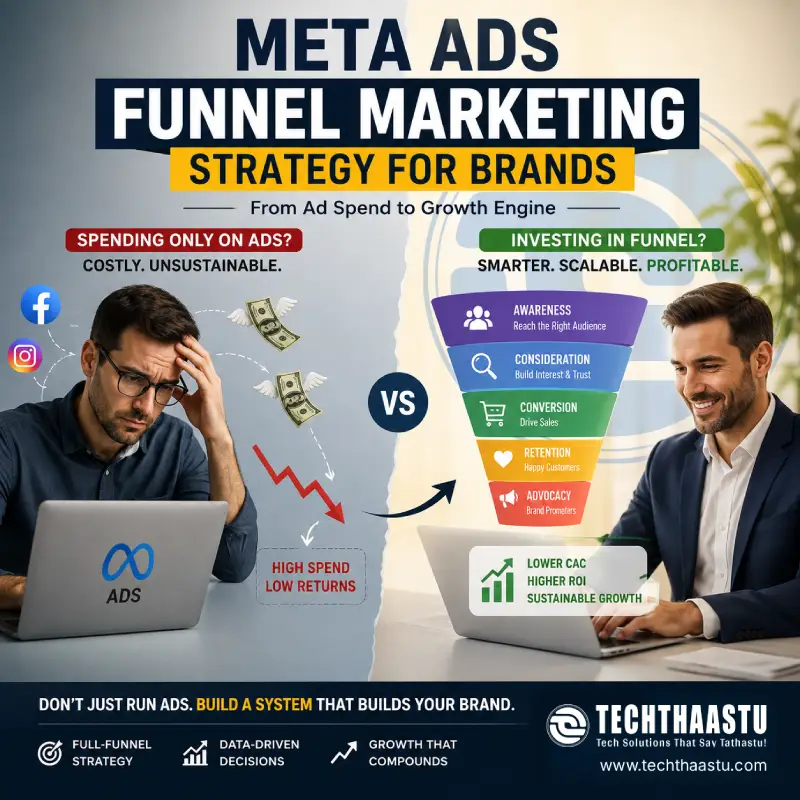
A practical step-by-step guide to launching a new product or brand, building awareness, earning trust, generating demand and converting prospects through Meta Ads.
Many businesses start Meta advertising with a simple expectation: launch an advertisement, generate leads and convert those leads into customers. That approach can work for an established brand with strong market recognition, a proven offer and an audience that already understands the product.
The situation is very different when a company is launching a new product, entering a competitive market or building a brand that most potential customers have never heard of. In that situation, asking a completely unfamiliar person to immediately buy or book a sales call can create unnecessary resistance.
The more useful way to think about Meta Ads is as a full-funnel customer acquisition system. Some advertisements create awareness. Others educate. Some demonstrate expertise. Some provide social proof. Others address objections, create intent or directly ask for a conversion.
A person who has never heard of your brand does not necessarily have enough information to make a buying decision. They may not know what your product does, whether the problem is important enough to solve, whether your company is credible, whether your solution is suitable, or whether other customers have trusted you.
Therefore, the first job of marketing is often not to close the sale. It is to move the prospect from "I don't know this company” to "I understand this company and I believe it may be able to solve my problem.”
When launching a new product, the first challenge is often not conversion. It is recognition. Your potential customer may have the problem you solve but may not know that your company exists.
Awareness advertising introduces the brand in the context of a relevant customer problem. Instead of immediately presenting a product catalogue, focus on an issue the audience already experiences or an opportunity they may not have considered.
"We provide advanced business automation software. Book a demo today.”
"Your team may not have a productivity problem. Your business process may simply be creating unnecessary manual work.”
The second message gives the audience a reason to stop and think. It creates relevance before introducing the product. That is the purpose of discovery-stage advertising.
Once people recognise the problem, the next question is usually: "Why is this happening?” This is where educational content becomes extremely valuable.
Educational Meta content should make the prospect smarter about their situation. Instead of repeatedly explaining why your company is good, explain the problem, common mistakes, alternative approaches and the consequences of doing nothing.
Explain common operational problems, customer acquisition mistakes, technology decisions, workflow inefficiencies, implementation risks and practical ways to improve.
The audience begins to associate your brand with useful knowledge rather than simply promotional messages. That association can become valuable when the prospect later enters an active buying cycle.
Attention does not automatically become trust. A prospect can watch your video, visit your website and still wonder whether your company can actually deliver.
Testimonials answer the question: "Has somebody else trusted this company?” A good testimonial should describe an actual experience, problem, solution or outcome rather than simply saying that the company was "great.”
A case study demonstrates the journey from problem to solution to outcome. It gives prospects something concrete to evaluate and helps transform an abstract marketing claim into an evidence-based business story.
When used honestly and with appropriate permission, client associations can provide quick credibility. They communicate that your company has experience working with real organisations rather than operating only on marketing promises.
A Video Sales Letter or expert-led explanation can take prospects deeper into the problem, explain the solution, handle objections and establish the reasoning behind your offer before the prospect speaks to sales.
One of the biggest differences between weak and strong B2B marketing is the difference between describing features and demonstrating outcomes.
"We build custom software" describes a capability. A stronger case study explains what business problem existed, what was implemented, how the workflow changed and what measurable or observable improvement followed.
Once the prospect understands the problem and believes your company may be credible, another question appears: "Why should I choose this company instead of another option?”
This is where positioning becomes critical. Do not rely on generic statements such as "best service,” "innovative solution” or "customer-focused company.” These statements are difficult to verify and easy for competitors to copy.
Instead, explain who you serve, what specific problem you solve, what your approach looks like and what business outcome you are designed to improve.
Once someone has consumed enough information and demonstrated stronger intent, the CTA can become more direct. The objective is to make the next step feel useful rather than forcing a sales conversation before the prospect is ready.
Useful when the customer needs help understanding the right solution for their specific business.
Useful when identifying problems is the first step toward recommending a solution.
Useful when seeing the actual product or workflow helps reduce uncertainty.
A Meta lead is not automatically a customer. The experience after the form submission can significantly affect whether an opportunity moves forward.
If a prospect submits an enquiry and waits several hours or days for a response, the marketing investment can lose momentum. Similarly, if the sales conversation does not connect the prospect's problem with the proposed solution, the lead may not progress.
Retargeting should not simply mean showing the same advertisement repeatedly. The message should reflect what the prospect has already done.
| Prospect Behaviour | Better Next Message | Purpose |
|---|---|---|
| Watched an educational video | Deeper educational content | Increase understanding |
| Engaged with social content | Expert insight or case study | Build credibility |
| Visited the website | Testimonial or proof | Reduce uncertainty |
| Visited a service/product page | Demo, FAQ or objection-handling content | Increase buying confidence |
| Submitted an enquiry | Relevant proof and follow-up | Move toward sales |
A new product has a special challenge: there may be little or no existing demand for the product name itself. People cannot search for something they do not know exists.
Therefore, the launch should begin with the problem, customer situation and desired outcome rather than relying entirely on product-name advertising.
Introduce the problem and explain why it matters. The audience should understand the business or personal consequence before you introduce the solution.
Explain that a better approach exists. Demonstrate the mechanism, workflow or product without immediately pushing for a hard conversion.
Once sufficient evidence exists, use testimonials, demonstrations, case studies and direct offers to capture high-intent prospects.
One of the most dangerous mistakes is expecting the first campaign to immediately reveal the perfect audience, creative, offer and budget. A new campaign is also a learning mechanism.
Your initial advertising activity can help reveal which problems attract attention, which messages create engagement, which creative formats generate quality traffic and which prospects eventually demonstrate buying intent.
If every advertisement is judged only by immediate CPL, a brand can accidentally eliminate the very content that creates trust and makes future conversion easier.
Paid advertising and organic search should not be treated as isolated marketing departments. They can reinforce one another when the same customer problems, questions, evidence and expertise are developed consistently across channels.
Meta can introduce a brand before someone searches for it. SEO can capture people who actively search for the problem or solution. Educational content can answer questions. Case studies can establish experience. Brand mentions and authoritative references can strengthen reputation. The website becomes the central knowledge layer connecting these activities.
There is no reliable shortcut where adding a few "AI keywords” makes a website automatically appear in generative search. Google's current guidance states that the fundamentals of SEO remain important for generative AI features and recommends unique, useful content rather than artificial optimisation tricks.
Make it easy to understand who the organisation is, what it does, whom it serves, where it operates and what topics it has genuine experience in.
Build connected topic clusters rather than publishing unrelated articles. A group of genuinely useful resources can establish much stronger subject coverage than isolated keyword-targeted pages.
Explain what the business has actually done, learned, implemented or observed. First-hand experience creates information that generic content is less likely to provide.
Make authorship and subject-matter expertise understandable where appropriate. Explain why the person or organisation is qualified to provide the information.
Support important claims with credible evidence, authentic customer experiences, transparent business information and verifiable references.
Make important content crawlable, indexable and clearly structured. Strong content cannot contribute to search visibility if search systems cannot properly access or understand it.
A serious digital marketing strategy should connect paid media with a broader organic authority system. For a brand such as Techthaastu, this means thinking beyond individual keywords and building a recognisable entity around the problems and industries the business genuinely serves.
Understand whether the person wants information, comparison, validation, a solution or immediate purchase. The content and advertisement should match that intent.
Build connected resources around core business topics so individual pages contribute to broader topical depth.
Think beyond a handful of obvious keywords and map the total addressable search market around customer problems, industries, questions and buying situations.
Maintain consistent information about the organisation, people, products, services and relationships across important digital properties.
Earn legitimate references, expert contributions, partnerships and industry coverage that help establish real-world authority.
Review older pages when information becomes outdated, competitors improve or search intent changes. Authority requires maintenance, not just publishing.
When these systems work together, advertising does not operate as an isolated activity. Every successful customer interaction can create new assets that improve future marketing.
Techthaastu's approach should not be limited to selling individual digital marketing activities such as "Facebook Ads management.” Advertising is only one component of a larger customer acquisition system.
A stronger business-growth approach connects customer research, positioning, content, paid advertising, landing pages, SEO, conversion optimisation, remarketing and customer experience. Each component should contribute to the same customer outcome.
This is particularly important for businesses with complex buying journeys. If a prospect needs to understand the problem, compare solutions, evaluate credibility and obtain internal approval before purchasing, a single conversion advertisement cannot realistically perform every job.
Don't start by asking only, "Which Meta Ads campaign should we run?” Start by asking, "What does our customer need to believe, understand and experience before they are ready to buy?”
Techthaastu can help you evaluate your customer journey, marketing funnel, digital presence, paid advertising strategy, content, search visibility and conversion opportunities.
Meta Ads can generate direct leads, but treating every impression as a demand for immediate conversion can make a brand's advertising strategy unnecessarily narrow.
A stronger system recognises that people enter the market at different levels of awareness. Some are ready to buy. Others are researching. Some do not yet understand the problem. Others know the problem but do not trust any particular provider.
Your advertising should therefore give each stage an appropriate message.
That is the difference between running advertisements and building a marketing system.
The best long-term strategy is not to force every person to convert today. It is to consistently increase the number of people who know your brand, understand your expertise, trust your evidence and are ready to choose you when their buying moment arrives.
Explore blogs you should also liked
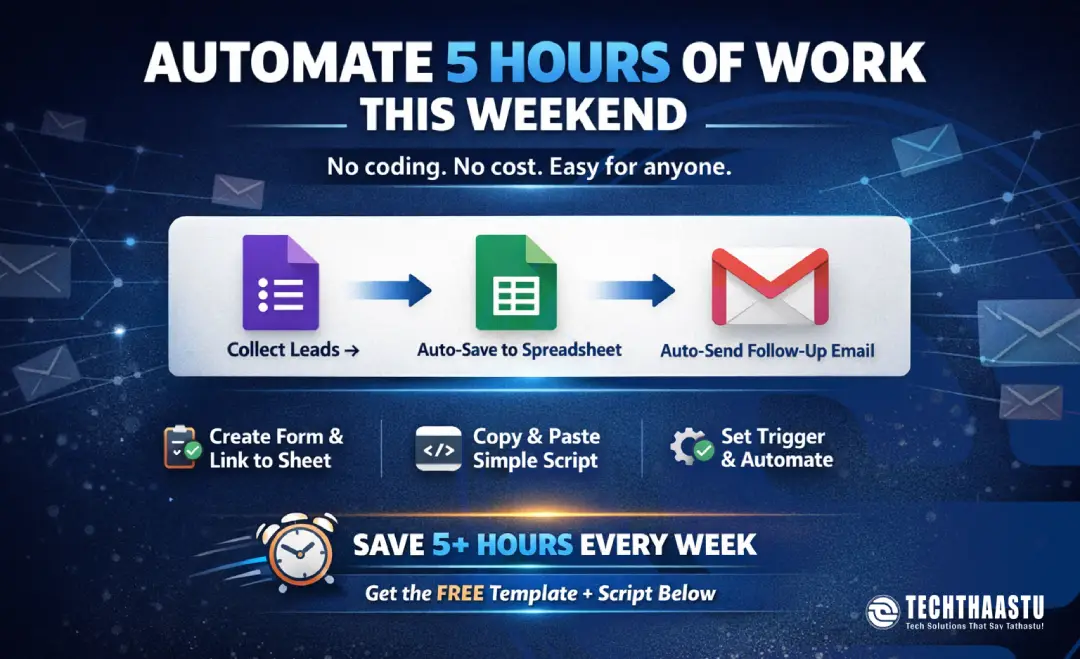
Learn how I built a free automation emailer using Google Forms, Sheets, Apps Script, and Gmail. A complete beginner-friendly walkthrough to send personalized follow-up emails automatically—no paid tools, no coding expertise required.
Updated On: 2026-10-03 23:17:53
Read More
Learn how to rank your Google Business Profile with Google's relevance, distance and prominence framework, plus GBP optimization and Maps visibility tips.
Updated On: 2026-10-03 23:09:22
Read More
SEO, AEO, and GEO strategies that work in 2026 — updated Core Web Vitals thresholds, what replaced guest posting, and how to get cited by AI search.
Updated On: 2026-10-03 22:53:38
Read More
Learn how to grow your spa business with a proven Spa Business Growth Plan — increase online bookings, retain clients, and build a recurring customer base using digital marketing and smart IT systems.
Updated On: 2026-03-23 12:35:19
Read More Techthaastu builds practice management systems, client portals, and automation tools for CA firms, legal practices, and insurance companies across India. Based in New Delhi. Real team. Real results.
Just send us a mail.
Techthaastu Private Limited, Pt. Mehru Marg, Near Govt. Girls Senior Secondary School(Bijwasan), vill. Bharthal, Dwarka sector 26, New Delhi, India 110077
Techthaastu Support Team
Typically replies within an hour