
Table of Contents
A lot of what worked in 2025 still matters. But three things have shifted enough that a strategy built only around last year's checklist is now leaving visibility on the table: how Google measures page experience, how "quality content" gets defined, and — the big one — the fact that a growing share of searches never produce a click at all.
Before the tactics: in the first four months of 2026, 68% of US Google searches ended without a single click to any website, up from about 60% in 2024 — the steepest two-year jump on record, according to SparkToro's analysis of Similarweb clickstream data. When an AI Overview appears on a search, that click-through rate roughly halves again.
That doesn't mean SEO stopped mattering. It means ranking and being visible are no longer the same goal. In 2026, a page can rank well and still get almost no visits — because the answer was already served on the results page. The businesses adapting well aren't abandoning SEO; they're adding two extra layers on top of it: making sure their content is the one an AI system actually chooses to answer with (Answer Engine Optimization) and making sure it's the source generative engines trust enough to cite (Generative Engine Optimization).
Here's what that looks like in practice.
Google's Core Web Vitals — the metrics that judge how a page actually feels to use — haven't gone away, but two things changed since 2025:
Current "good" thresholds for 2026: Largest Contentful Paint (LCP) under ~2.5 seconds, INP under 200 milliseconds, CLS under 0.1 — measured from real user data (Chrome UX Report), not lab tests.
Here's the nuance worth understanding: Core Web Vitals act as a tiebreaker, not the deciding factor.
Multiple 2026 analyses agree that strong, relevant content will still outrank a faster page with weak content — but when two pages are otherwise comparable, the one that passes Core Web Vitals wins.
One notable side effect: sites with poor Core Web Vitals are also showing up less often inside AI Overviews, so page experience now indirectly affects your AEO/GEO visibility too.
One more housekeeping note: AMP no longer provides any ranking advantage in 2026 — a well-built standard page performs identically.
E-A-T (Expertise, Authoritativeness, Trustworthiness) from 2025 has an added "E" that matters more than ever: Experience. Google's own guidance and the broader industry consensus in 2026 agree on this: generic, competently written content that could have been produced by anyone is no longer enough to rank or get cited — it has to demonstrate first-hand experience with the topic.
Long-form content still tends to earn more visibility and more backlinks — but length by itself isn't the signal; depth and original insight are.
This is the section that didn't really exist in a 2025 SEO checklist and now can't be skipped. Quick definitions, since the terms get used loosely:
The good news is that the tactics here are not tricks — they're backed by actual research. An empirical study from Princeton, Georgia Tech, and the Allen Institute for AI tested content modifications across thousands of queries and found the levers that reliably increase AI-citation rates: adding statistics (a meaningful lift), citing authoritative sources, and including attributed expert quotes — all of which are simply good writing practice. The same research found keyword stuffing actually reduces citation probability, because it degrades the natural flow that language models use as a quality signal.
Backlinks remain one of the top ranking factors — that part hasn't changed. What has changed is how the best ones get earned. Industry survey data from 2026 shows digital PR has overtaken guest posting as the top-performing link-building tactic, roughly by a two-to-one margin, as publishers get more selective and low-effort guest posts lose effectiveness. Most SEO teams now also set a minimum authority threshold before accepting a link at all, rather than chasing volume.
There's also a newer reason backlinks matter beyond classic rankings: research analyzing tens of thousands of brands found that unlinked brand mentions from high-authority publications correlate far more strongly with AI-search visibility than traditional backlinks do. In other words, getting your brand talked about by credible sources — even without a link — is increasingly what determines whether AI systems recognize and cite you.
Some 2025-era advice is still correct — quality content, mobile optimization, and ethical link-building all still apply. But a few things deserve an explicit update for 2026:
| Old approach (2025) | What to do instead in 2026 |
|---|---|
| Optimize mainly for clicks and rankings | Also optimize for visibility inside AI answers — impressions and citations matter even without a click |
| Guest posting as the primary link tactic | Digital PR and original data as the primary tactic; guest posting as a supporting piece |
| CLS/FID as your responsiveness benchmark | INP and session-wide visual stability, measured with real-user field data |
| Generic "high-quality content" | Content demonstrating genuine first-hand experience, refreshed on a visible schedule |
| Treating AI Overviews as a threat to ignore | Treating AI Overviews and chat-based answer engines as a channel to actively optimize for |
And the things that were bad practice in 2025 remain just as bad in 2026 — if anything, more easily detected:
Explore blogs you should also liked
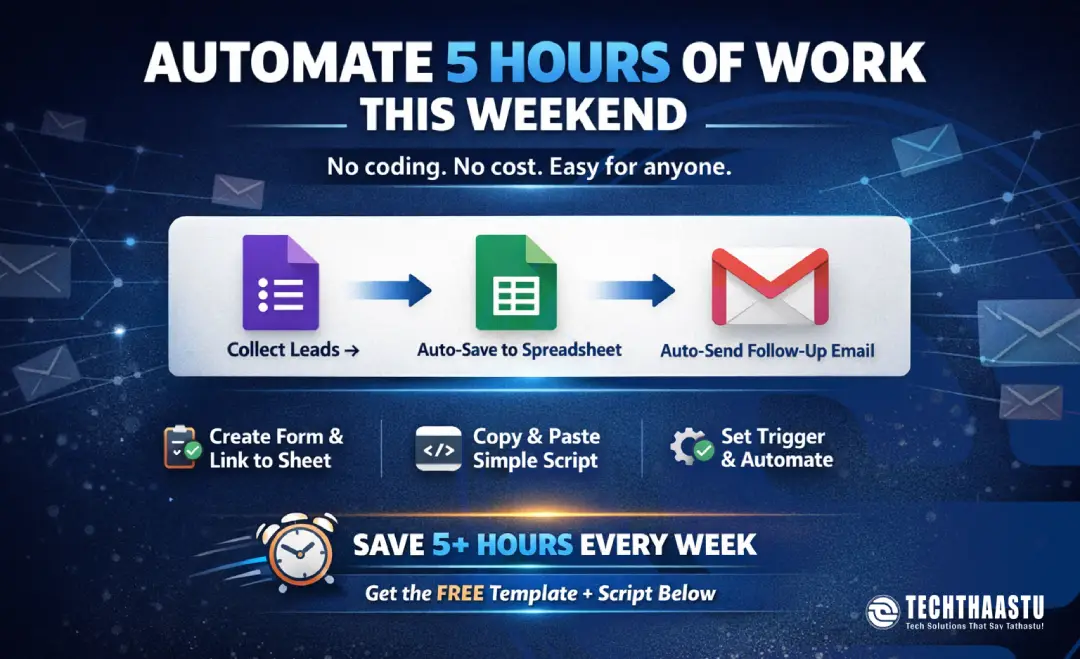
Learn how I built a free automation emailer using Google Forms, Sheets, Apps Script, and Gmail. A complete beginner-friendly walkthrough to send personalized follow-up emails automatically—no paid tools, no coding expertise required.
Updated On: 2026-10-03 23:17:53
Read More
Learn how to rank your Google Business Profile with Google's relevance, distance and prominence framework, plus GBP optimization and Maps visibility tips.
Updated On: 2026-10-03 23:09:22
Read More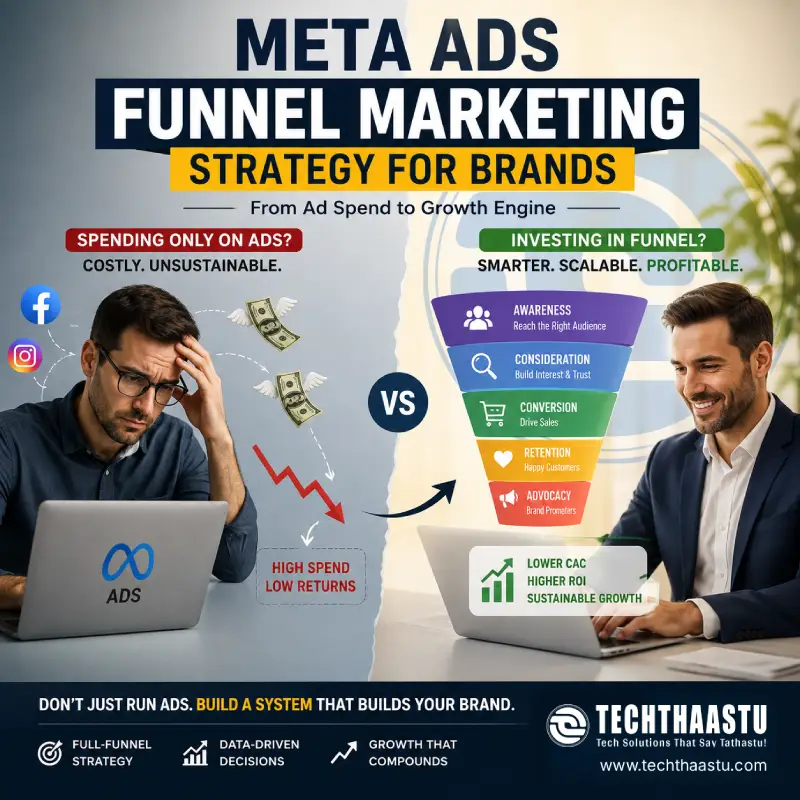
Learn how Meta Ads can work as a complete marketing funnel for a new brand—from awareness and trust to consideration, conversion, remarketing and customer growth.
Updated On: 2026-10-03 23:07:04
Read More
Learn how to grow your spa business with a proven Spa Business Growth Plan — increase online bookings, retain clients, and build a recurring customer base using digital marketing and smart IT systems.
Updated On: 2026-03-23 12:35:19
Read More Techthaastu builds practice management systems, client portals, and automation tools for CA firms, legal practices, and insurance companies across India. Based in New Delhi. Real team. Real results.
Just send us a mail.
Techthaastu Private Limited, Pt. Mehru Marg, Near Govt. Girls Senior Secondary School(Bijwasan), vill. Bharthal, Dwarka sector 26, New Delhi, India 110077
Techthaastu Support Team
Typically replies within an hour