What We Already Done Yet
CHECK OUR CREATIVE WORK
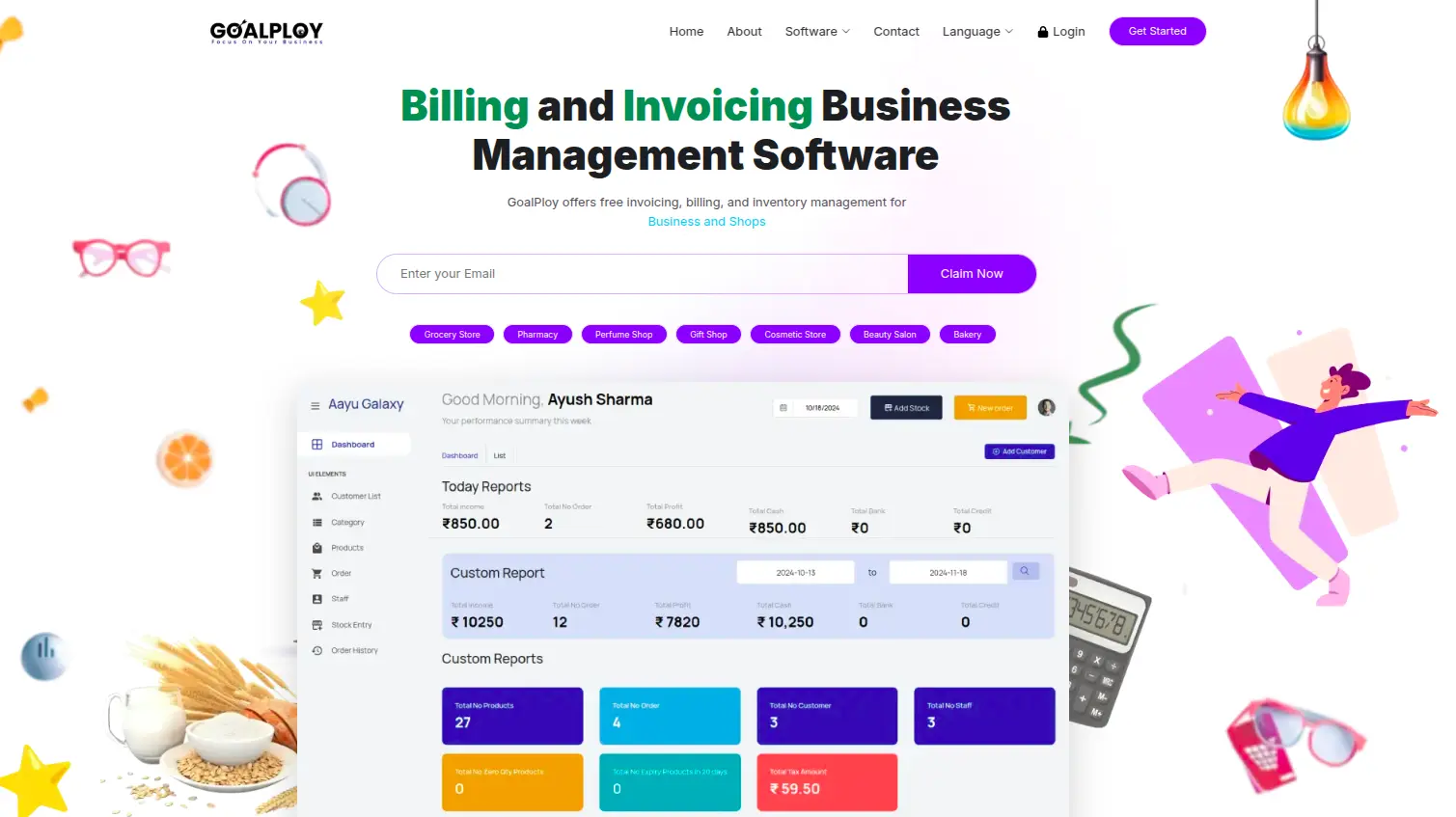
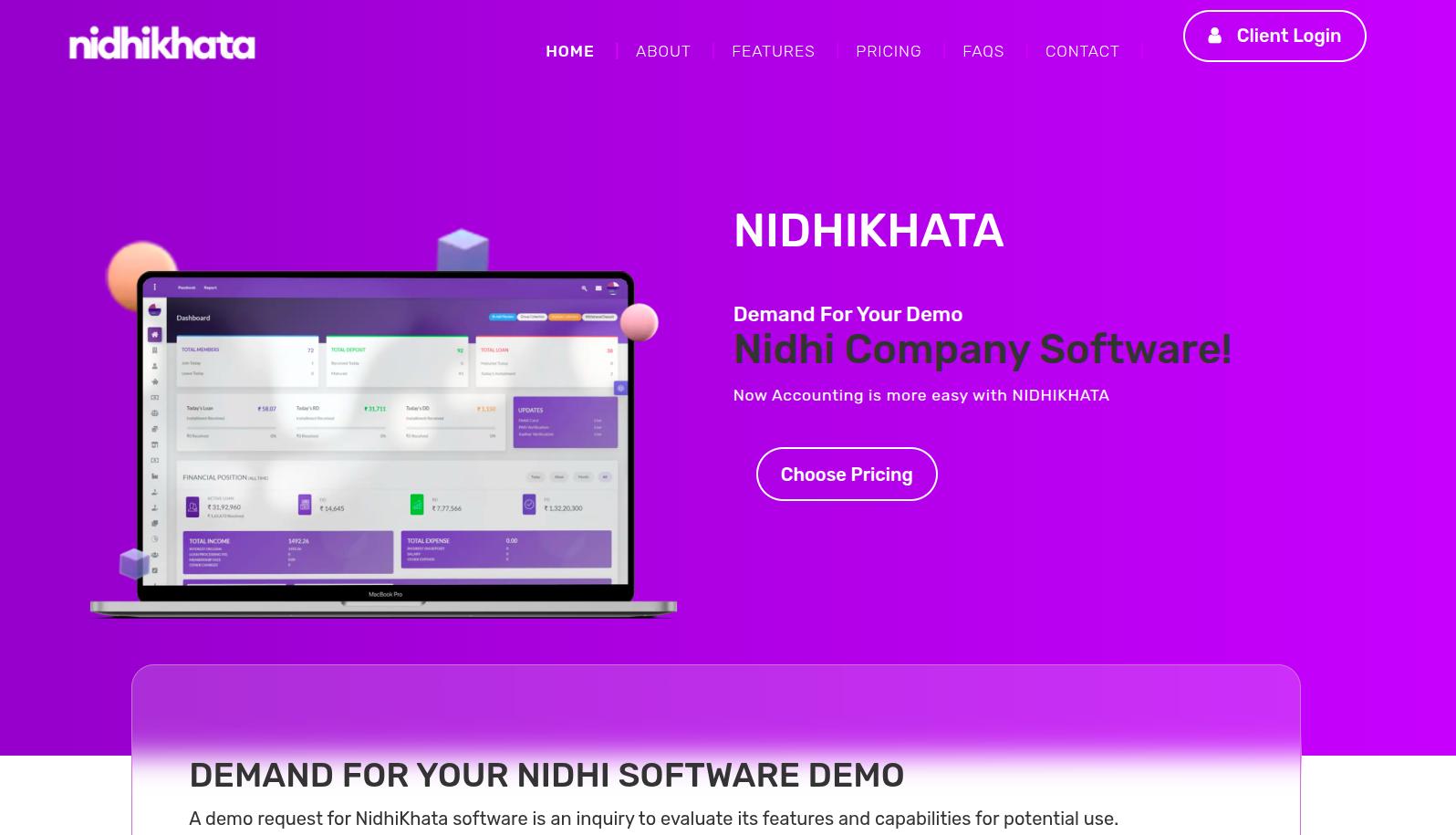
Kirti Nagar's WHS and Furniture Block bring together furniture showrooms, manufacturers, wholesalers and commercial-furniture businesses. Different business models create different requirements for handling enquiries, product specifications, quotations, orders and fulfilment.
A made-to-order furniture business may need to record dimensions, materials, finishes and customer-approved changes. A showroom may need a structured way to move from an enquiry to a quotation and confirmed order. A commercial supplier may need to coordinate bulk orders, dispatch records and delivery updates.
Techthaastu Pvt Ltd develops custom business software around the process that needs improvement. Kirti Nagar provides the commercial context; the actual features, data structure and technology should be decided only after understanding your business.
Start with a defined business problem rather than a long list of software features.
When a quotation changes several times before confirmation, the team may struggle to identify the latest agreed specifications. A structured workflow can keep quotation versions, customer requirements and order status together.
Businesses handling different products, dimensions, finishes or stock records may need a more consistent way to maintain product information and check availability.
Entering the same customer, product or order information into multiple tools creates avoidable work. Suitable integration or a central record can reduce duplication where the existing systems permit it.
When an order moves through several operational stages, a status workflow can make outstanding tasks, dispatch details and delivery-related updates easier to monitor.
Sales, operations and accounts teams may need different access and responsibilities. Defined user roles and task ownership can make the workflow easier to follow.
Managers who collect information from several spreadsheets may benefit from a dashboard displaying agreed indicators such as pending orders, open enquiries or work awaiting approval.
Not necessarily. The right solution might be a focused module, an integration with existing software, an improved website enquiry process or a larger application. The scope should follow the problem, not the other way around.
These serve different purposes. Identifying the correct type of system helps keep the project scope and budget aligned with the intended result.
Explains what your business offers and gives prospective customers a clear route to enquire.
Allows authorised customers, suppliers or employees to access the information and actions assigned to them.
Performs defined business tasks through structured records, business rules, permissions and workflows.
A project can combine these elements where justified. For example, a furniture business might use a public product website connected to an internal quotation and order application. Any required connection should be assessed and scoped separately.
Each module should have a defined user, purpose and expected business outcome.
Record customer requirements, product specifications, quotation revisions, approval status and confirmed orders.
Business outcome: The team can refer to a consistent order record instead of reconstructing the latest agreement from separate conversations.
Organise product information, variants, stock records and agreed inventory-related workflows.
Business outcome: Staff can consult structured product information and follow the agreed stock-management process.
Record enquiries, customer details, follow-up activities and the progress of sales opportunities.
Business outcome: Enquiries have clearer ownership and the team has a more consistent follow-up process.
Define applicable work stages, assigned responsibilities, progress records and completion-related updates.
Business outcome: Relevant users can see the status of work and identify outstanding tasks.
Provide authorised users with selected records, documents, operational actions and reporting views.
Business outcome: Frequently requested information can be accessed through a defined interface rather than handled entirely through manual exchanges.
Explore integration with compatible external systems when the required interfaces, permissions and data formats are available.
Business outcome: Suitable connected processes can reduce repeated entry and manual reconciliation.
If your business already uses accounting, billing, inventory or CRM software, that should be part of the initial discussion. Where practical, extending or integrating an existing system may be preferable to rebuilding functionality it already handles. Integration feasibility depends on system access, available APIs, licensing terms and data requirements.
The examples below show possible applications of custom business software. They are not assumptions about the existing systems or problems of any particular company.
Businesses producing made-to-order furniture may need structured specifications, quotation approvals, job stages and order-related records.
Possible system: Custom order and production workflow application.
Businesses handling product enquiries, quotations and customer orders can explore structured records and better coordination between sales and fulfilment.
Possible system: Product catalogue, enquiry management and order tracking.
Businesses handling repeat customers, bulk orders, negotiated quotations or dispatch coordination may require more structured commercial workflows.
Possible system: B2B customer records, quotations and operational dashboards.
Teams coordinating jobs, dispatches, delivery records and customer updates may benefit from defined statuses, responsibilities and reporting.
Possible system: Dispatch tracking and operational workflow management.
Where relevant, professional practices can explore structured client records, assignment tracking, document requests and role-appropriate access.
Possible system: Administrative workflows or an authorised client portal.
A business with a specific operating model may require functionality that standard software does not provide adequately.
Possible system: A focused web application, customer portal or admin dashboard.
Legal, insurance and other professional practices may also be suitable where the requirements match the service. Any sector-specific access, confidentiality or compliance requirements should be established during project planning and reviewed by the appropriate client or compliance adviser.
A useful system should make a defined task easier to complete, a record easier to find or a workflow easier to monitor. Adding modules without a clear purpose increases complexity without necessarily improving the business process.
Capture product, quantity, specification and contact details relevant to the enquiry. This can help the sales team understand the request before following up.
Record agreed stages and responsibilities so authorised staff can identify pending actions without collecting updates manually from several people.
Give staff and customers access appropriate to their role. The required permission rules must be designed and tested against the actual workflow.
Bring agreed operational information into a dashboard to support routine review. Reporting quality depends on the accuracy and completeness of the underlying data.
The technical decisions should support the business requirements today without creating unnecessary complexity for future maintenance.
PHP, CodeIgniter or Laravel, and React or Node.js where appropriate to the agreed application design.
MySQL or MongoDB according to the data model, application requirements and access patterns.
API development and compatible external-service integrations, subject to access and feasibility.
Responsive interfaces, database-driven admin panels and defined workflows for the intended users.
Requirements may include authentication, role-based permissions, server-side validation, secure handling of sensitive information, backups and error monitoring.
The required controls depend on the information the software handles, the way users access it and the risks identified during project planning. Security must be implemented and tested, not assumed from the choice of framework.
AI coding assistants and application-building tools can help accelerate prototyping and repetitive development work. A working demonstration, however, is not proof that an application is ready for business use.
Technical judgement remains necessary to assess access controls, exposed data, integration behaviour, validation, testing, deployment, code maintainability and future changes. AI can assist development; it should not replace engineering review and accountability.
Before development begins, document the agreed source-code delivery and ownership terms, third-party licences, domain and hosting responsibilities, backup arrangements, maintenance scope and support expectations. The exact arrangements should be specified in the project agreement.
A clear sequence helps establish what will be developed, how it will be tested and what needs to be agreed before launch.
Discuss the business model, users, current tools, data and tasks that need to be improved.
Agree on essential features, roles, integrations, data requirements, exclusions and project deliverables.
Implement the agreed functionality and test important workflows, permissions, validations and integrations.
Review the agreed deliverables, prepare for deployment and document the next steps for maintenance and support.
The estimate depends on the number and complexity of features, user roles, interface requirements, data migration, integrations, security requirements, testing and deployment arrangements.
A focused internal tool and a multi-module business application are different projects even if both are described as custom software. Techthaastu should estimate the work after the requirements and deliverables have been clarified.
You do not need to prepare a complete technical specification. A few practical details can help the discussion focus on the right system and avoid unnecessary features.
Share the process you want to improve, the people who will use it and any existing software involved. The next step is to determine what should be built and what belongs in the project scope.
Request a Quotation Contact TechthaastuChoose a related service when it fits the requirement. A business website, an online store and an internal application solve different problems.
For businesses that need to present their services, products, expertise and enquiry options online.
A focused website option for businesses needing essential company, service and contact information.
For businesses that need online product discovery, shopping functionality or a product-selling website.
Explore the broader service for custom business applications, operational workflows and system requirements.
Whether you manage a furniture business in Kirti Nagar, coordinate commercial orders, or need a custom internal application, share your workflow with Techthaastu Pvt Ltd. Together, the appropriate software scope can be discussed before development decisions are made.
CHECK OUR CREATIVE WORK
Crafting Excellence with Cutting-Edge Technologies






WHAT OUR CLIENT SAY

Ramesh Singh
I have associate with Techthaastu to develop my saloon website and it was Very Good Experience, Professional Work, Strongly Recommend Other People.
Bhupender Singh
Exemplary Web Development Firm! Astounding Proficiency, Seamless Correspondence, and Enthralling Creations. Warmly Advocated

Mukesh Pasbola
Tech Thastu is one of the best professional organised company to develop professional website and online marketing channel to develop business growth. I have been used their services for my business growth. Their Team provides the best outcome of services that matches the business profiles and requirements to make changes in the marketing platform.
Aman Sharma
I chose TechThaastu for my mobile app project, and they effortlessly met all my requirements. Their highly experienced team can tackle any issue in minutes, making the entire experience incredibly smooth and professional.
Frequently Asked Questions
Please feel free to call or email us, or use our contact form to get in touch with us. We look forward to hearing from you!
Our office:
Techthaastu Private Limited, Pt. Mehru Marg, Near Govt. Girls Senior Secondary School(Bijwasan), vill. Bharthal, Dwarka sector 26, New Delhi, India 110077
Call us:
+918383889042
Send Us Mail:
contact@techthaastu.com
Contact Techthaastu Team today and let our experienced team of professionals transform your digital aspirations into reality
 Techthaastu builds practice management systems, client portals, and automation tools for CA firms, legal practices, and insurance companies across India. Based in New Delhi. Real team. Real results.
Just send us a mail.
Techthaastu Private Limited, Pt. Mehru Marg, Near Govt. Girls Senior Secondary School(Bijwasan), vill. Bharthal, Dwarka sector 26, New Delhi, India 110077
Techthaastu Support Team
Typically replies within an hour